
For a long time, photography was a cherished part of my life—a way to capture fleeting beauty and express what words couldn’t. But somewhere along the way, I lost touch with that passion. I stopped taking pictures as often, and even when I did, I no longer felt the urge to edit or share them. Then, unexpectedly, a wild flower caught my eye. Its quiet brilliance stirred something in me, reminding me of the joy I once found behind the lens. When searching for words to accompany the image, I began to rediscover the rhythm of my old hobby. What follows is a reflection on that flower and the deeper meaning it awakened.
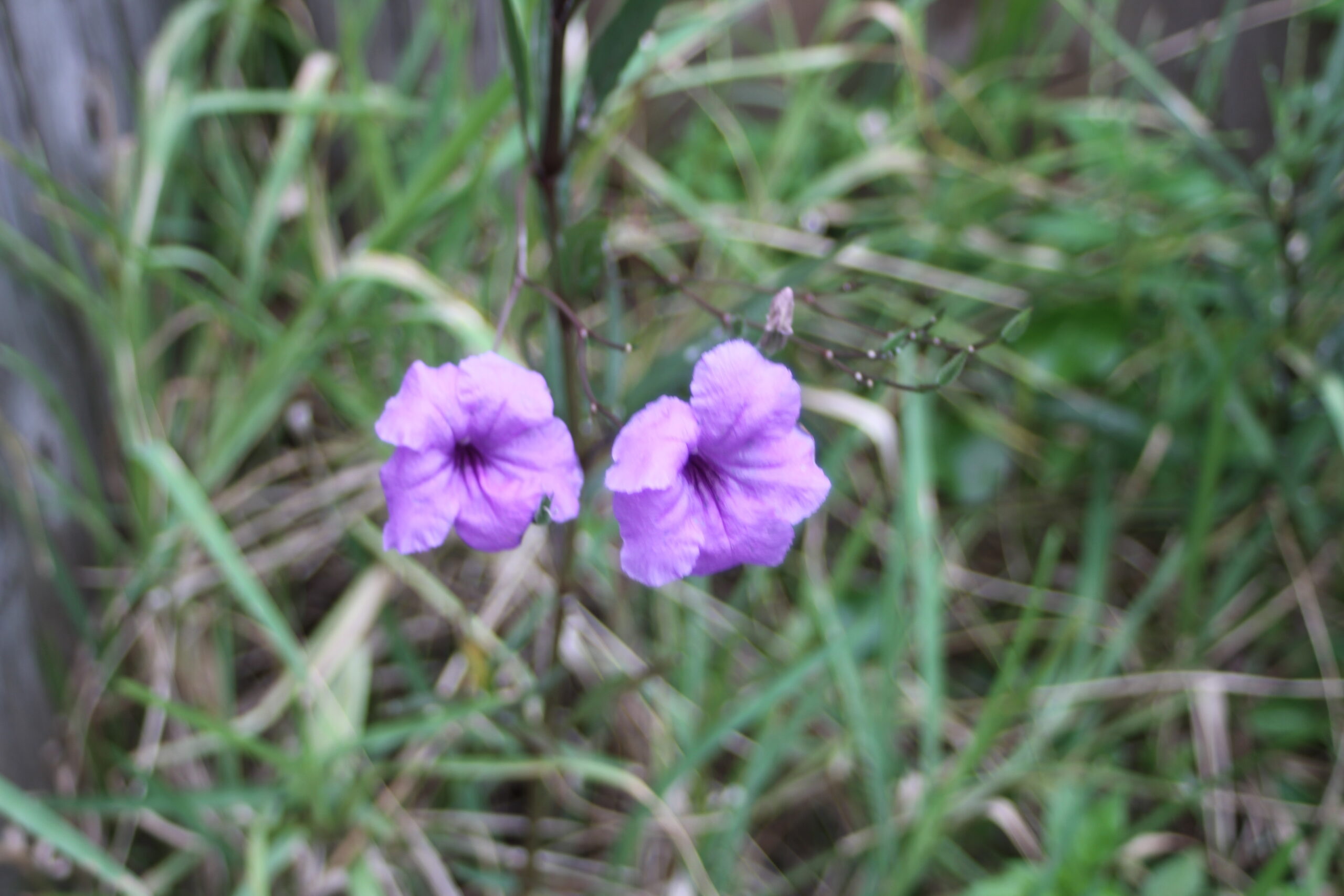
The Mexican Petunia (Ruellia simplex) is a perennial flowering plant that thrives in warm, sunny environments. Native to Mexico, the Caribbean, and South America, it has become popular as an ornamental plant in many parts of the world because of its vibrant purple, funnel-shaped flowers. The blossoms typically open in the morning and fade by evening, with new blooms appearing daily, giving the plant a constant display of color throughout the growing season. Its long, slender green leaves provide a lush backdrop that highlights the striking flowers.
One of the most distinctive traits of the Mexican Petunia is its ability to adapt to a variety of soil and water conditions. It grows well in both dry and wet areas, even tolerating flooding, which makes it a hardy option for landscapes. Because of this resilience, it is frequently used in gardens, borders, and decorative containers. However, its ability to spread quickly through both seeds and underground rhizomes can make it invasive in certain regions, where it may crowd out native plant species if not managed properly.
Beyond its ornamental value, the Mexican Petunia also supports pollinators such as bees, butterflies, and hummingbirds, which are attracted to its nectar. Gardeners who enjoy creating pollinator-friendly environments often appreciate the role this plant plays in encouraging biodiversity. Still, care must be taken to monitor its spread and prune or contain it when necessary. With thoughtful management, the Mexican Petunia can be both a beautiful and beneficial addition to a garden.
The Mexican Petunia blooms with a defiant grace, its violet trumpets unfurling each morning like declarations of resilience. In the hush of dawn, it sings silently to the sun, rising from soil that may be parched or drowned—unbothered by extremes. Its petals, ephemeral yet persistent, whisper of renewal: that beauty need not be permanent to be powerful. Each blossom is a fleeting triumph, a reminder that even brief moments of color can brighten the landscape of a life.
Rooted in contradiction, it thrives where others falter—flourishing in flood and drought, wild yet ornamental, invasive yet beloved. It teaches that strength is not always loud; sometimes it spreads quietly, underground, until the world is changed. The petunia’s dance with pollinators is a soft rebellion against isolation, inviting connection in every bloom. In its rhythm of daily rebirth, it offers a lesson: to bloom again and again, even when yesterday’s flower has faded.



Leave a Reply