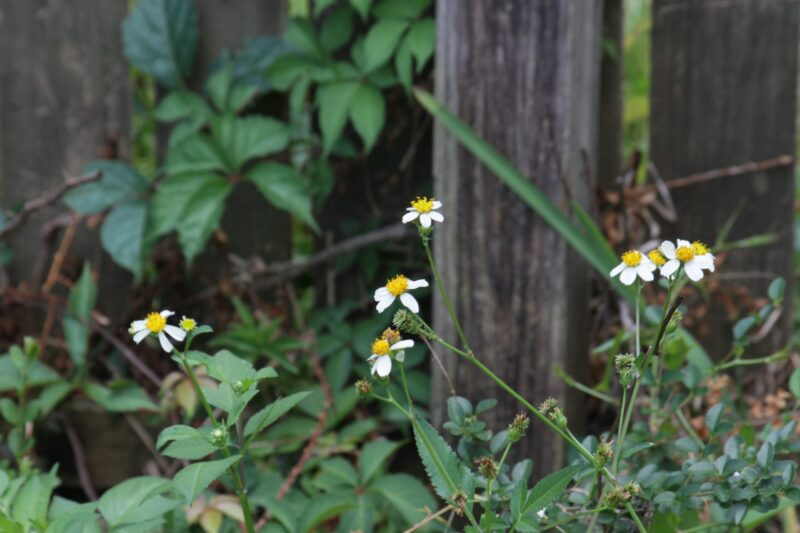
Bidens alba, commonly known as Spanish needles, shepherd’s needles, or beggar’s ticks, is a resilient wildflower recognized for its daisy-like flowers with bright white petals surrounding a vivid yellow center. The blossoms are borne on slender stems above green, serrated leaves. Although often considered a common weed, the plant is highly valued by ecologists as an important nectar source for bees, butterflies, and other pollinators. Its sharp, two-pronged seeds readily cling to clothing and animal fur, aiding its widespread dispersal.
Native to the tropical and subtropical regions of the Americas, Bidens alba has become naturalized throughout Africa, Asia, Australia, and many Pacific islands due to its adaptability and rapid growth in disturbed soils. Historically, it has been widely used in traditional medicine, with its leaves and roots prepared as herbal remedies for inflammation, digestive ailments, sore throats, and minor infections. The young leaves and shoots are also edible and have long served as a nutritious, though slightly bitter, cooked vegetable in many communities.
Today, Bidens alba occupies an important ecological role despite its reputation as a garden weed. Because it flowers almost year-round in warm climates and from late spring through autumn in cooler regions, it provides a reliable food source for pollinators during periods when few other plants are in bloom. As a result, it is increasingly incorporated into wildflower gardens, pollinator habitats, and permaculture landscapes for its resilience, minimal maintenance requirements, and significant contribution to local biodiversity.
The specimen shown is growing in a naturalized backyard or garden edge beside an aged wooden fence. Dense green vegetation, including broadleaf plants, climbing vines, and low-growing ground cover, surrounds the flowers, creating a lightly managed environment where native and naturalized species thrive. The fence provides shelter, while soft, filtered light indicates a partially shaded location.
The ground is covered with leaf litter, twigs, and other organic debris, creating a moist, nutrient-rich habitat ideal for the growth of Bidens alba. Such environments are commonly found along garden borders, fence lines, woodland edges, roadsides, and other disturbed areas where the species establishes easily. These habitats also support a wide variety of pollinators, birds, and beneficial insects, highlighting the plant’s ecological importance despite its frequent classification as a weed.
Gonza



Leave a Reply